Monday, March 17, 2014

Science Takes On a Silent Invader

Monday, January 20, 2014

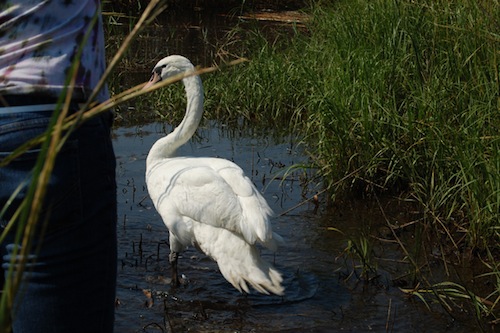
New York State DEC wants mute swans killed or captured by 2025 

By Cyndi Murray
Riverhead News Review

Citing “aggressive behavior towards people” and “destruction of submerged aquatic vegetation,” the state Department of Environment Conservation has released a new plan to kill or capture all wild mute swans by 2025.

The DEC’s Management Plan for Mute Swans in New York State aims to reduce the population of mute swans, which has grown considerably in recent years on Long Island. ...

The DEC is accepting comments on the mute swan plan through Feb. 21. Mail your thoughts to NYSDEC Bureau of Wildlife, Swan Management Plan, 625 Broadway, Albany, NY 12233-4754

Read the full story at link.

Friday, January 10, 2014

The environmental, and economic, costs of invasive species

Ignoring the impacts of ecosystem changes comes with a price tag 

By Alexandra Pecci
The New Hampshire Business Review

The tunicate is a spineless marine animal that’s better known by another name -- sea squirt, which sounds like a cute little creature that might be the best friend of a cartoon mermaid. But Larry Harris has a nickname for didemnum, one particular kind of sea squirt that is anything but cute.
 
"My term for it is the tunicate from hell,” says Harris, professor and chair of the department of biological sciences at the University of New Hampshire.

That’s because didemnum grow in thick, sheet-like colonies that cover moorings, pilings, float bottoms and anything else they can get a hold of. In New Hampshire, it’s a serious marine pest.
Didemnum is one of many non-native, invasive species that dominate the coastal waters of New Hampshire and New England. Invasive marine species like didemnum do more than simply take over their new environments.

“It does have economic impacts,” Harris says. “Everything from clogging intakes to cooling systems of water treatment plans to having a negative impact on aquacultures.” ...

 Read the full story at link.

--------------------------------------------------------------------------

New York State DEC proposes regulatory changes to prevent the introduction of aquatic invasive species at boat launches


By WBNG News

(WBNG Binghamton) The New York State Department of Environmental Conservation is proposing new regulations to prevent the introduction and spread of aquatic invasive species at DEC boat launches, DEC Commissioner Joe Martens announced.

The proposed regulatory changes require boaters to remove all visible plants and animals from boats, trailers and associated equipment and to drain boats before launching at or leaving a DEC boat launch and waterway access.

DEC will accept public comments on the proposal through February 24, 2014. Comments on the proposed regulations can be sent via e-mail to fishregs@gw.dec.state.ny.us, or mailed to Edward Woltmann, New York State Department of Environmental Conservation, Bureau of Fisheries, 625 Broadway, Albany, NY  12233-4753. ...

Read the full story at link.

Monday, January 6, 2014

Extreme cold may wipe out high percentage emerald ash borer larvae

By Paul Huttner
Minnesota Public Radio

Here’s one resident who may welcome the extreme cold wave headed for Minnesota. Your local ash tree.

The extreme temperatures moving in with Sunday’s arctic blast may kill off a significant percentage of emerald ash borer larvae, according to one of the premier forestry experts in Minnesota.


Read the full story at link.


Tuesday, November 12, 2013

State cracks down on harmful invasive species 

November 3, 2013
By JOAN GRALLA at Newsday

New York State is cracking down on harmful invasive species after years of delays, adding scores to its list of banned plants, insects and animals.

Under the state plan, 115 species would be outlawed -- about 10 times the current number. Another 29 would be subject to restrictions.

The Department of Environmental Conservation quietly posted the expanded list on its website late last month, a move that was hailed as overdue by environmentalists and decried as an overreach by commercial nurseries, including some on Long Island. ...

Under the state law, anyone who imports, ships, or introduces or sells banned invasives can be fined as much as $250. For repeated violations by professionals, the top fine is $2,000 -- and they could jeopardize their licenses or permits. ...

A 60-day comment period ends Dec. 23. The rules take effect six months after they are finalized.

Read the full story at: link.

---------------------------------------------------------------

Wednesday, April 17, 2013

Invasive Kudzu Bugs May Pose Greater Threat Than Previously Thought


www.ScienceDaily.com
April 15, 2013

The invasive kudzu bug has the potential to be a major agricultural pest, causing significant damage to economically important soybean crops. Conventional wisdom has held that the insect pests will be limited to areas in the southern United States, but new research from North Carolina State University shows that they may be able to expand into other parts of the country.

Kudzu bugs (Megacopta cribraria) are native to Asia, and were first detected in the U.S. in Georgia in 2009. They have since expanded their territory as far north as Virginia. The bugs have an interesting life cycle, which has been thought to be a limiting factor on far they can spread.

Eggs laid in the spring hatch into a first generation, which we'll call "Generation A." The immature bugs of Generation A normally feed on kudzu plants until they reach adulthood, when they have been known to move into commercial soybean fields. These mature adults lay eggs that hatch into Generation B during the summer months. Generation B kudzu bugs can feed on soybean crops during both their immature and adult life stages, causing significant crop damage. Because the immature Generation A kudzu bugs have only been seen to feed on kudzu, researchers thought that the pest would not be able to migrate to northern and western parts of the United States, where kudzu doesn't grow. But now it's not so clear. ...

Read the full story at link

Monday, March 11, 2013

Invasive species may be key to understanding death of hundreds of loons

by Dan Kraker, Minnesota Public Radio

DULUTH, Minn. — Spring is in the air, with daylight savings taking effect on Sunday, and loons will begin their migration back to the north woods in less than a month.
         
Loons, of course, are a cultural and natural icon, not only in Minnesota but across the Great Lakes states. But last fall, nearly 900 loons died while migrating south across Lake Michigan, probably more. And it's likely at least some were from Minnesota.
         
Scientists are not sure what killed the loons, but they suspect that invasive species may be to blame.

In October, Lynette Grimes was hiking toward Lake Michigan at Sleeping Bear Dunes National Lakeshore, outside Traverse City, Mich. The 52-year-old from the nearby town of Benzonia has walked the beaches there for years. But she wasn't prepared for what she saw. ...

The scientists offered an idea about what might have happened: Invasive zebra and quagga mussels filter the water so it's incredibly clear, allowing an algae called cladophora to grow in huge amounts. Big storms churn up the algae, which settles to the lake bottom and rots. That creates an environment without any oxygen, an ideal home for bacteria that produces a deadly toxin called Type E botulism. That botulism is ingested by invertebrates, tiny worms and freshwater shrimp. And then it works its way up the food chain. They are eaten by fish, including the invasive round goby, which are then eaten by diving birds like loons. ...

Read the full story at link.

Image: J.M. Kosciw

Monday, March 4, 2013

Myths lie at root of native, exotic plants

Written by
Yew Dell Botanical Gardens

Amur honeysuckle, burning bush, ‘Bradford’ pear ... a few poster children for the invasive exotic plant debate. The debate has raged for decades.  But it is often myth that fuels the dissension.

But before we dispel some myths, how about a few definitions?

Continue reading at link.

-------------------------------------------------------------------------------

Conn. trying to contain tree-eating borer

By QUANNAH LEONARD, Republican-American of Waterbury

Piles of ash bark cushioned the feet of state workers inside a state garage on Middlebury Road on a recent day. The men and women used draw knives to slowly peel back bark on bolts of ash trees, looking for signs of a tiny green beetle.

Their work began at the beginning of February, and will continue for at least one more session this month. They want to determine just how long and far the emerald ash borer has infested the woodlands of Connecticut.

The answers will help federal and state agencies, plus municipalities, work together to reduce the spread of this bug.

With each strip of bark, the workers uncovered a pale canvas that can potentially show a history of the highly mobile critter. They are peering for a tell-tale sign — serpentine tunnels left by the larvae as they eat.

Last summer, the bug was first found in the Nutmeg state in Prospect. Since then, it has been confirmed in Beacon Falls, Bethany, Naugatuck and Waterbury. The critter is an invasive species native to Asia that measures a half-inch long.

The infestation threatens Connecticut's valuable stands of ash trees, and experts say could present a threat to public safety.

Read the full article at link.

Tuesday, February 26, 2013

Invasive species threaten Wisconsin trees 

By Sarah Eucalano
The Badger Herald

Madison has begun testing trees for emerald ash borers, an invasive Chinese insect that has been devastating much of North America’s ash trees.

Ald. Scott Resnick, District 8, said around 25 percent of Madison’s trees are ash trees, adding it will cost the city millions in order to fully cover the incurable disease, which causes ash trees to slowly rot and die. ...

Ken Raffa, a UW etymology professor, said the main emerald ash borer infestation is in Detroit and has been in the United States for 12 years. Having infested the southeastern part of Wisconsin, including parts of the Milwaukee area as well as areas surrounding the Mississippi River.

Raffa said in China the insects do not kill healthy trees, but only sick or old trees that do not have defenses. He said China’s ash trees have good defenses against emerald ash borers, which North American ash trees do not have. “There is no evidence any of the ash trees in the eastern half of the United States having any resistance,” Raffa said. ...

Read the full article at link.

-----------------------------------------------------------------------

Massachusetts Officials Announce Quarantine to Halt Spread of Emerald Ash Borer

DALTON, MA – Thursday, February 21, 2013 – Officials from the Department of Conservation and Recreation (DCR) announced today that a quarantine will be established in Berkshire County, in order to stop the spread of the invasive insect species Emerald Ash Borer (EAB). This decision comes after extensive survey in the affected area and public hearings.

The quarantine will take effect March 1, 2013.

EAB was first detected in Massachusetts in Dalton in August of 2012. Massachusetts is the eighteenth state discovered to have EAB within its borders. ...

The quarantine order means that certain products will be regulated from moving outside the regulated area, including all hardwood firewood (any piece of wood smaller than 48”), all ash nursery stock, and any ash lumber that has not been treated. Proper wood treatments include the removal of bark and half an inch of wood, dry kiln sterilization, fumigation, and heat treatments.

The State of New York recently added 22 new counties to their EAB quarantine, including counties that abut the Berkshire County border. This will allow wood to move from quarantined county to quarantined county, including moving regulated wood from Massachusetts to the mills that are just over the border in New York, relieving some of the financial pressure on the wood industry in Berkshire County.

Read the full article at pdf .

Monday, February 25, 2013

Quality Parks Master Naturalist Program Training in April

Long Island, NY - The Quality Parks Master Naturalist (QPMN) program provides environmental training that builds natural history skills, recreational know how, and a heightened awareness and appreciation of the great outdoors. 
 
The program encapsulates 45 hours of training and 20 hours of community service. The course curriculum includes:
  • Long Island Explorer
  • Emergency Ready Naturalist
  • Invasive & Ecological Restoration
  • Trails & Greenways
  • Wetlands & Wildlife
  • Working Lands & Sustainability
  • Graduation
 Form more information, visit link.

Wednesday, January 23, 2013

New York DEC: All options will be considered in invasive species debate

By John Alexander
PostStar.com

LAKE GEORGE, NY -- There’s still life to the Lake George Park Commission’s proposal that could see a mandatory boat inspection and washing program encircle the lake, state officials said Tuesday.

Park Commission officials have spent months in negotiations with the state Department of Environmental Conservation and Gov. Andrew Cuomo’s office trying to garner state-level support for the proposed invasive-species fighting measure.

Park Commission members have regularly griped that DEC was uninterested in the conversations. But that’s suddenly changed as weekly three-way conversations are now under way. “All the options are on the table,” said DEC Region 5 Director Bob Stegemann, when asked if his agency supports boat washing or a less-restrictive alternative. ...

Read the full story at link.

--------------------------------------------------------------------------

Lake George Targets Invasive Species

Wall Street Journal
Associated Press

LAKE GEORGE, N.Y.—State regulators are working on a long-term plan to protect Lake George from invasive species, possibly including mandatory boat inspections.

The Lake George Park Commission had been developing plans for inspections and washing, with a $40 fee. That plan is now on hold while the Department of Environmental Conservation drafts an environmental impact statement, seeks public input, and considers alternatives.

The 32-mile-long Adirondack lake already has some invasive species such as milfoil and Asian clams. The commission has programs to fight those species, including spreading plastic mats to smother them.

The state has agreed to provide $50,000 to expand a boat steward program, and $200,000 to fight Asian clams. Environmentalists say mandatory boat inspection and washing is the best way to prevent spread of invasive species. ...

Read the story at link.

--------------------------------------------------------------------------

Saturday, December 29, 2012

Density of Invasive Reed, Phragmites australis, Mapped in Great Lakes

Phragmites australis, an invasive species of plant called common reed, grows rapidly into dense stands of tall plants that pose an extreme threat to Great Lakes coastal wetlands. Early treatment is the key to controlling Phragmites. Scientists have mapped the U.S. coastline of all five Great Lakes using satellite technologies. The Phragmites map is the first of its kind. It is "a highly accurate data set that will allow national, regional and local managers to visualize the extent of Phragmites invasion in the Great Lakes and strategically plan efforts to manage existing populations and minimize new colonization."

Learn more at link.

Wednesday, December 19, 2012

More Zebra Mussels Found in Upper Chesapeake Bay

From Maryland Department of Natural Resources:

Maryland Department of Natural Resources (DNR) biologists found young zebra mussels attached to buoys off Havre de Grace on December 3. DNR is asking boaters and anglers to be on the lookout for this harmful, invasive mussel.

The biologists collected 20 live zebra mussels attached to the concrete anchor blocks for three channel marker buoys. DNR discovered the mussels when Captain Shawn Orr and the crew of DNR’s A.V. Sandusky pulled the buoys from the water for cleaning and winter storage.

“We know that these mussels are from this year’s spawn since these buoys and anchors were deployed this spring,” said Matt Ashton, a DNR biologist and mussel expert who helped collect the mussels. “We plan to check these and other buoys every fall, as part of DNR’s limited zebra mussel monitoring effort in the upper Bay area.” ...

DNR asks that people who live and work on the water keep an eye out for zebra mussels and call 410-260-8615 if they find anything suspicious.  More information about zebra mussels can be found here.

The non-native and invasive zebra mussel was first found in Maryland in late 2008 at two locations in the Susquehanna River: the Conowingo Dam and further upstream at Glen Cove Marina, Harford County. Sporadic sightings since then indicate establishment of a zebra mussel population in the lower river and downstream dispersal, but no apparent rapid increase in abundance. ...

For the full story visit link.

Wednesday, December 12, 2012

Southern Maine clams threatened by invasive species, warming climate

By Will Graff
The Forecaster

FREEPORT, ME — Small, green crabs are wreaking havoc along the Harraseeket River, and could soon devour the soft-shell clam population into extinction.

As water temperatures continue to rise and the winters get warmer, experts and clammers say the crabs, which eat spat – clams in larval stage – combined with coastal acidification, could drive 1,800 licensed clammers out of work and drastically alter the ecosystem.

Chad Coffin, president of the Maine Clammers Association, said the crabs have essentially taken over two-thirds of the productive clam flats in the last two decades, eating the mussels and scallops along the way. The devastation of clams has accelerated in the last decade and the problem is only getting worse, he said.

Green crabs, originally from Japan, were first recorded on Long Island, N.Y., in the mid-1860s and weren't seen in Casco Bay until the early 1900s, Beal said. The green crab popualtions have been kept in check by severe cold snaps, Beal said, experienced frequently throughout the last century, allowing clams and other shellfish to recover.

But now, a warming climate has changed all that. Scientists fear the area might not have those same extended periods of cold experienced in previous decades, leading to larger and larger populations of green crabs, and as a result, the disappearance of clams. ...

Read the full story at link.

----------------------------------------------------------------------------

Tuesday, December 11, 2012

New Pound Ridge, NY Program To Fight Invasive Plant Species

By Bob Dumas
Pound Ridge Daily Voice

POUND RIDGE, N.Y. — A new initiative to fight the proliferation of invasive plants within the town has been formed between the Pound Ridge Conservation Board and the Henry Morgenthau Preserve of the Bedford Audubon Society.

The Invasives Project-Pound Ridge is a public/private task force formed to encourage and coordinate efforts to reduce existing infestations and to prevent new ones from occurring through scientific study, education, early detection and rapid response within Pound Ridge.

"You do not have to go far to see the damaging effects that uncontrolled invasive plants, such as oriental bittersweet, have on our area,” said Marilyn Shapiro-Lowell, chairman of the Henry Morgenthau Preserve. “Just drive along Route 172 near the Fox Lane campus: Whole woods have collapsed under the weight of oriental bittersweet vines during high winds from the hurricanes.” ...

The first public forum will be held Jan. 13 at 7 p.m. at the Pound Ridge Library. The snow date is Jan. 14. A panel of speakers will discuss targeting certain species and management strategies.

Read the full story at link.

-----------------------------------------------------------------------------

To Fight Invasive Species, Florida Makes It A Competition

By Thomas Andrew Gustafson
WFSU

In South Florida, bagging some snakes could win you some money. The Florida Fish and Wildlife Conservation Commission will be cracking down on invasive pythons in South Florida in the New Year. The agency and its partners will be holding the 2013 Python Challenge to catch as many snakes as possible.

The first ever python challenge starts in January and runs until mid-February. It’ll focus on Burmese pythons and the person who catches the most wins 1,500 dollars. And Florida Fish and Wildlife Spokeswoman Carli Segelson says the Python Challenge is about invasive species education as much as it is a competition. ...

Segelson says if people have nonnative pets they can no longer care for; they should give them to the agency instead of releasing it into the wild.

Read the full story at link.

Friday, December 7, 2012

Beetles released to attack invasive species

By KEITH WHITCOMB JR. / Bennington Banner

POWNAL, VT -- About two millimeters long and appearing as black specks, the town's newest 379 residents are here to hopefully stay and perhaps eat a few unwelcome newcomers.

On Thursday, two people from the Department of Forests, Parks, and Recreation released nearly 400 Laricobius nigrinus (small black beetle) onto four hemlock trees on Mason Hill Road, near the Massachusetts state line and next to a tributary to the Hoosic River. Jim Esden, forestry specialist for the department, said he hopes the adult beetles will survive the winter and feed off the hemlock woolly adelgid, an aphid-like insect that has been spreading slowly northward and was reported in Pownal over the summer.

The adelgid is an invasive species and threatens the health of hemlock trees, said Esden. The small black beetle, a native of the Pacific northwest, eats nothing but adelgids and follows a similar life cycle, being active in the winter when it is not too cold and remaining largely dormant in the hot summer. Esden said chemicals can be used to kill adelgids, but biological controls have their advantages.

"Because this is a water supply area, we didn't want to use chemicals," Esden said.

The four hemlock trees sit off Mason Hill Road on property owned by Williamstown, Mass. Esden said the water source serves as an emergency supply for Williamstown, making the chemical option less than desirable. ...

Barbara Burns, forest health program manager for the department, placed about 100 beetles on each hemlock tree, which were selected for their health and adelgid infestation. She said the beetles need enough adelgids to eat, otherwise their population will not take hold. She said the beetles released Thursday were grown in a lab by Virginia Tech, Va., however their ancestors are from Idaho. They came in small tubes, roughly 100 beetles to a tube, and were gathered on white shreds of paper for placement onto each tree.

Esden said the beetles only eat adelgids and nothing in this area specifically preys upon the beetles, so the odds are fair they will not all be eaten by spring. He said this same type of thing was done three years ago in Windham County, but it that is not enough time to tell if the beetles are working. He said their use has been documented in the past and shown to work, and while they are slow to take effect, the spread of the adelgid is not fast, either. According to Burns, the beetles' presence in Pownal is the first time they have been seen in Bennington County. ...

Read the full story at link.

--------------------------------------------------------------------------------

Maryland takes aim at invasive plants - New regulations will lead to ban on some species

by Holly Nunn, staff writer
Gazette.Net

Marylanders may know about kudzu, the invasive ivy that can be seen choking trees along highways from Texas to New England. But there are species imported from other regions or countries that also threaten the native landscape, and the Maryland Department of Agriculture is proposing regulations to identify and rank floral invaders.

In 2011, the General Assembly passed legislation establishing the Invasive Plants Advisory Committee, charging that committee with establishing a framework for assessing how much risk a given species poses to the environment.

The framework chosen by the committee is based on the U.S. Department of Agriculture Animal and Plant Health Inspection Service’s weed risk assessment protocol, but also will take into account Maryland-specific risks.

The federal framework ranks a plant’s potential to spread, its economic impact and its risk of changing the environment or affecting human health.

Based on the risk assessment that the department adopts, invasive plants will be designated as either Tier 1 or Tier 2.

Under the regulations, Tier 1 plants will be banned from being sold, and Tier 2 plants will require labeling at the retail level. Landscapers also will be required to notify their clients of any Tier 2 plants being used, said Carol Holko, the Maryland Department of Agriculture assistant secretary for plant industries and pest management and a committee member. ...

“The department is taking public comment on the risk assessment regulations until Dec. 17.

Read the full story at link.

-----------------------------------------------------------------------------------

Monday, December 3, 2012

Partners of the St. Lawrence Eastern Lake Ontario Partnership for Regional Invasive Species Management (SLELO-PRISM) Reports 2012 Accomplishments

(Nov. 2012) Partners of the St. Lawrence Eastern Lake Ontario Partnership for Regional Invasive Species Management (SLELO-PRISM) have completed a tremendous season managing harmful invasive species. The SLELO-PRISM is one of eight partnerships across New York State, encompassing the counties of St. Lawrence, Jefferson, Oneida, Lewis and Oswego outside of the Adirondack Park who’s mission is to “protect the ecological integrity of the eastern Lake Ontario Basin and Northern New York’s natural & cultural resources from the threat of invasive species....

In 2012 partners of the SLELO-PRISM completed a tremendous amount of work designed to reduce the threat and impacts posed by invasive species. This work also serves to protect rare and endangered species of flora and fauna found within the five county PRISM region. '

Highlights from 2012 include: Significantly reducing the human health threats posed by Giant Hogweed by removing plants from 136 sites. Assisting in the restoration of over 230 acres of freshwater resources by controlling invasive Water Chestnut plants. Partners also helped to restore 50.02 acres of globally rare Alvar habitat in the eastern Lake Ontario coastline. Restoration of 19.52 acres of rare “Fen” habitat. Restoration of 3.6 acres of freshwater dune barrier systems within the Eastern Lake Ontario Coastline.

Restoration of 0.39 acres of wetland habitats and 5.8 acres of important habitats found in wildlife management areas. Other accomplishments include the establishment of an invasive species prevention zone on the core forest at Tug Hill, prevention activities designed to reduce the spread of aquatic invasive species, numerous education and outreach initiatives and several citizen science events.

According to Program Coordinator Rob Williams, “it is the energy and collaborative nature of our partnership along with support from New York State and the Central and Western Chapter of The Nature Conservancy that makes this work possible – our partners are motivated and engaged and they are the ones that truly make the difference.”

For more information about invasive species or the St. Lawrence Eastern Lake Ontario Partnership for Regional Invasive Species Management, please visit their website at www.sleloinvasives.org.

-----------------------------------------------------------------------------------

Invasive Boa Constrictor Thriving on Puerto Rico

(Nov 29, 2012) Non-native boa constrictors, which can exceed 10 feet and 75 pounds, have established a breeding population in Puerto Rico, one that appears to be spreading, according to recent research. This research is the first to document a large constrictor species established in the U.S. or its territories outside of Florida. The established boa constrictor population likely originated with the pet trade.

Link

----------------------------------------------------------------------------------

Invasive seaweed species spotted on Maine coast, poses threat to lobstermen and beachgoers

By Will Graff, The Forecaster

CAPE ELIZABETH, Maine — An invasive species of seaweed is rapidly moving north and recently was found on the town’s shore by South Portland High School students.

Researchers are concerned the plant will dominate native seaweed and other plants. It also might turn into a nuisance for lobstermen, if it gets caught in their traps, and for beach-goers, who may notice its stench when it washes ashore.

The finding in Cape Elizabeth is the first sighting on a shore in Maine of the red Asian seaweed, Heterosiphonia japonica, although Northeastern University researchers in Boston also documented it during the summer while diving off the coast.

In October, students found the seaweed during a marine biology class where they were tasked with finding 11 different species of seaweed at Crescent Beach. The students returned to the lab with the different sets of seaweed they had gathered and put them under a microscope.

They found that one of the species was dramatically different than the native species and posted their findings through the Gulf of Maine Research Institute’s Vital Signs program, an online research platform aimed at locating invasive species in Maine.

Their teacher, Susan Richman, has worked on projects with Vital Signs and directed the students to use the program to connect with interested scientists, said Christine Voyer, one of GMRI’s Vital Signs staffers. Matt Bracken, a marine biology professor at Northeastern who is leading the research on the species, took notice of the student’s observation and confirmed their suspicion by posting a comment on their page....

Read more at link.

Photo credit: The Forecaster BDN

-----------------------------------------------------------------

Bill to Protect Ohio River Basin from Asian Carp

By Pennsylvania Fish and Boat Commissionin Hunting and Fishing

U.S. Senators Pat Toomey (R-Pa.) and Sherrod Brown (D-Ohio) introduced a bipartisan bill to help prevent the invasion of Asian carp into the Ohio River basin.

Although several federal agencies have been combating Asian carp, none have been designated as the lead agency to coordinate the federal response with state and local partners in the Ohio and Upper Mississippi River basins.

The Strategic Response to Asian Carp Invasion Act would allow the federal government to build a more effective partnership with state and local entities fighting to end the spread of Asian carp. This bill would place the U.S. Fish and Wildlife Service in charge of coordinating a new federal multi-agency effort, which would include the National Park Service, U.S. Geological Survey, and Army Corps of Engineers. This multi-agency effort would include providing technical assistance, best practices, and other support to state and local governments working to stop the spread of the Asian carp.

“Southwestern Pennsylvania’s iconic three rivers – the Allegheny, Monongahela and Ohio – are vital for both commerce and recreation. The spread of Asian carp in the Ohio River threatens this, and the federal government must act as a cooperative partner with state and local governments to stop this invasive species and protect the Ohio River basin’s ecosystem and economy. The Strategic Response to Asian Carp Invasion Act will help do just that, and I urge my colleagues to join us in defending the Ohio River basin against this invasive species,” Sen. Toomey said. ...

Read more at link.

Wednesday, November 14, 2012

NEW SENATE BILL WOULD STRENGTHEN PROTECTIONS AGAINST INVASIVE ANIMAL SPECIES AND DISEASES

Bill sponsor Sen. Kristen Gillibrand seeks to prevent the import of harmful non-native fish and wildlife in her second term

WASHINGTON (November 13, 2012)—Shortly before Congress broke for its pre-election recess, Sen. Kristen Gillibrand (D-N.Y.) took a major step forward to stop the import of invasive non-native animals when she introduced “The Invasive Fish and Wildlife Prevention Act of 2012” (S. 3606). Now that Congress has reconvened, the recently re-elected Senator will begin efforts to generate support for the bill from her Senate colleagues.

“This bill, which updates a key import law that is 112 years old, deserves serious consideration by the 112th Congress,” said Peter Jenkins, spokesperson for the National Environmental Coalition on Invasive Species. “Its companion bill in the House has bipartisan support, and we anticipate the same support for the Senate bill.”

This bill will allow the U.S. Fish and Wildlife Service to prevent new, harmful fish and wildlife from being imported into the country and to more quickly act to prevent the spread of those that are already here. S. 3606 is the companion bill to H.R. 5864, introduced by Rep. Louise Slaughter on May 30, 2012, and supported by 30 bipartisan co-sponsors.

The current U.S. law governing the import of animals has proven to be ineffective in protecting the country from the influx of thousands of non-native fish and wildlife species being imported into the country, hundreds of which are already known to be economically or ecologically harmful, or present disease risk. Often, protections are put in place to limit the spread and transport of harmful non-native animal species only after they have escaped and become established. Recent invasions by imported animal species such as the Burmese python, Asian carp, and red lionfish are together costing federal, state, and local governments tens of millions of dollars annually in efforts to control them. These costs could have been avoided if authorities had considered their risks beforehand and restricted their importation.

“A law enacted in 1900 provides insufficient oversight for the 21st century trade of live animals,” said Jennifer Nalbone, director of Navigation and Invasive Species for Great Lakes United. “The best defense against invasive species is to prevent them from being imported into the country in the first place. This bill goes a long way in preventing future invasions and protecting our environment, wildlife, and economy. Congress needs to enact this bill quickly.”

As a leading import market, the United States receives hundreds of millions of live, non-native animals each year for use in aquaculture or for sale by the pet and aquarium trades and other businesses. For years, the federal government has come under sharp criticism for allowing the import of invasive animal species that cause extensive damage to ecosystems, are a burden to taxpayers, and present safety or health threats.

The proposed legislation will create a new screening system within six years to proactively review live animals proposed for import to the United States and to restrict those that pose serious risks before they are imported, while also immediately giving the U.S. Fish and Wildlife Service greater flexibility and authority to make science-based decisions to prohibit or restrict live animals already in trade. The current law regulating animal imports does not require that animals being imported first be screened for invasiveness, for diseases they might carry, or for the risks they pose to humans or wildlife.

“Senator Gillibrand’s action provides a critical opportunity for Congress to close the loophole that allowed harmful invasive species like Asian carp, Burmese python, and red lionfish to be imported into the country,” said Bruce Stein of the National Wildlife Federation. “S. 3606 represents one of the most significant policy advances we can make to prevent future harmful invasions, and save taxpayers millions of dollars a year in damages and control costs.”

For more information, please visit www.necis.net.

Monday, October 15, 2012

Kudzu Reaches Northern Ohio

By Mary Beth Breckenridge
Beacon Journal staff writer

Kudzu has been called the vine that ate the South. Now it’s the North’s turn to struggle with it.

Workers in South Carolina try to remove the invasive plant kudzu. Kudza has been confirmed in Summit, Portage and Cuyahoga counties. (MCT File Photo)
Kudzu has reached our area [northern Ohio], with patches reported in Summit, Portage and Cuyahoga counties, said Kathy Smith, Ohio State University Extension program director in forestry. In fact, it’s been found as far north on our continent as Ontario and British Columbia. ...

That doesn’t necessarily mean the aggressive vine will soon drape our hillsides and choke our trees. It’s believed the growing season in Northern Ohio is too short to allow the plant to flower and produce fruit here, which keeps kudzu from spreading rampantly.

But that could change, said James Bissell, curator of botany at the Cleveland Museum of Natural History. The changing climate is warming our winters and stretching our growing season. Eventually the conditions could become ripe for kudzu to flourish in our area. “With global climate change, it could be a problem,” said Bissell, who tracks the distribution of plants in Ohio. “I expect it will be a problem.” ...

Read the full story at link.

----------------------------------------------------------------------

Monday, October 8, 2012

New York Receives $1.4 Million for Invasive Species

On October 2, 2012, the Environmental Protection Agency announced that New York State will receive $1.4 million to combat invasive species. The grants are a part of 21 grants offered the EPA’s Great Lakes Restoration Initiative.

For a list of grantees and awards, please visit link.

---------------------------------------------------------------------